Pengujian kekerasan tablet merupakan langkah kontrol kualitas yang penting dalam manufaktur farmasi. Pengujian ini mengukur kekuatan mekanis tablet untuk memastikan tablet tahan terhadap tekanan produksi, pengemasan, pengiriman, dan penanganan pasien. Lebih dari sekadar tugas kepatuhan, pengujian kekerasan tablet membantu produsen mengontrol konsistensi formulasi, mengevaluasi proses produksi, dan meningkatkan kinerja produk.
Cell Instruments menawarkan solusi presisi seperti Penguji Kekerasan Tablet MPT-02 untuk mendukung kebutuhan tim jaminan kualitas dan laboratorium R&D yang terus berkembang.
Mengapa Kekerasan Tablet Penting dalam Kontrol Kualitas Farmasi
Kekerasan tablet-juga disebut sebagai kekuatan pecah tablet-adalah karakteristik penting yang mempengaruhi integritas, disintegrasi, dan disolusi tablet. Menurut USP, kekerasan tablet bukan hanya ukuran kekuatan; ini merupakan indikator kemampuan tablet untuk menahan tekanan mekanis tanpa mengorbankan kemanjuran terapeutik.
Implikasi Utama dari Pengujian Kekerasan Tablet:
- Memastikan integritas tablet selama pelapisan, pengemasan, dan transportasi
- Membantu mengoptimalkan formulasi selama pengembangan
- Memastikan keseragaman dosis dan ketersediaan hayati
- Sesuai dengan standar peraturan seperti USP
Metode Pengujian Tablet Inti Berdasarkan USP
Uji Kekerasan Tablet (Metode Kekuatan Hancur)
Pendekatan yang paling umum adalah pendekatan metode kekuatan penghancur, di mana tablet dikompresi di antara dua pelat hingga pecah. Gaya yang dibutuhkan dicatat sebagai kekerasan tablet.
Persamaan untuk kekuatan tarik (tablet bulat):
σ = 2F / (π × D × H)
Dimana:
F = Gaya hancur, D = Diameter tablet, H = Ketebalan tablet
Pengujian ini sangat penting untuk tablet yang harus tahan terhadap penanganan yang kuat tanpa hancur, terutama selama pengemasan dan distribusi.
Uji Kompresi
Ini adalah uji tegangan mekanis yang meniru kondisi dunia nyata yang dihadapi tablet selama pengemasan dan pengangkutan. Alat ini mengukur seberapa besar gaya tekan yang dapat ditoleransi oleh tablet sebelum terjadi deformasi atau kerusakan.
The MPT-02dari Cell Instruments memungkinkan gaya kompresi yang terkontrol, memberikan akurat dan dapat diulang hasil.
Uji Kerapuhan Tablet
Pengujian kerapuhan mengevaluasi ketahanan tablet terhadap keausan permukaan dan pengelupasan. Tablet digulingkan dalam drum yang berputar dan kemudian ditimbang ulang. Hasil USP standar merekomendasikan a penurunan berat badan maksimum 1,0% sebagai dapat diterima.
Tes ini penting untuk memastikan tablet tetap utuh tanpa debu atau retak yang berlebihan.
Uji Pembengkokan Tiga Titik
Untuk tablet yang panjang, lonjong, atau berpetak, tombol uji lentur tiga titik lebih cocok. Ini mengukur kekuatan pemecah tablet dengan menopangnya di dua titik sambil memberikan tekanan di titik tengah hingga patah.
Metode ini sangat berguna untuk mengevaluasi tablet yang dapat dikunyah atau dicetak dan tersedia sebagai fitur opsional pada sistem MPT-02.
Tes dan Parameter Sekunder Utama
Ketebalan Tablet: Parameter fisik penting yang mempengaruhi keseragaman dan perhitungan kekuatan tarik.
Kerapuhan Tablet: Membantu mengidentifikasi formulasi yang tidak terikat dengan baik atau terlalu kering.
Uji Kerapuhan Tablet: Mengevaluasi kecenderungan tablet untuk patah di bawah kekuatan atau benturan rendah.
Kekuatan Tablet: Istilah umum yang menggabungkan parameter kekuatan tekan dan tarik untuk menilai daya tahan.
Memilih Penguji Kekerasan Tablet yang Tepat
Saat memilih penguji kekerasan tablet, mencari ketepatan, keandalan, dan kepatuhan terhadap standar farmakope.
Mengapa Memilih Penguji Kekerasan Tablet MPT-02?
Cell Instruments’ MPT-02 menawarkan fungsionalitas canggih yang dirancang untuk kontrol kualitas farmasi:
- Loadcell Presisi Tinggi untuk pengukuran gaya yang akurat
- Layar sentuh HMI 7 inci untuk pengoperasian yang intuitif
- Visualisasi data waktu nyata dan microprinter untuk keluaran instan
- Beberapa mode pengujian: penghancuran, kompresi, dan pembengkokan tiga titik opsional
- Kepatuhan terhadap USP, cocok untuk R&D dan jalur produksi
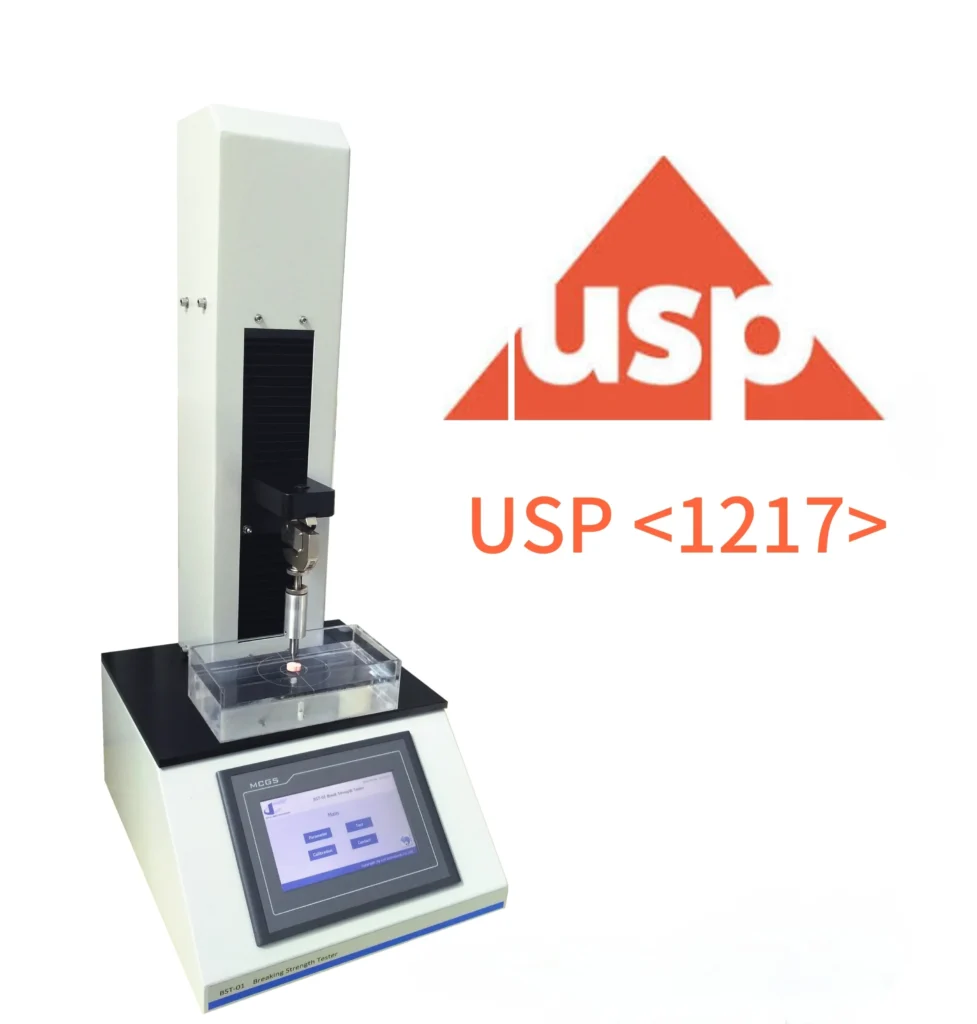
Sistem perlengkapannya yang fleksibel mendukung beragam bentuk dan ukuran tablet, sehingga ideal untuk tablet dengan geometri yang rumit.
Praktik Terbaik untuk Pengujian Kekerasan Tablet yang Andal
Mengkalibrasi penguji secara teratur dengan bobot yang dapat dilacak
Uji pada tingkat pemuatan yang konsisten (misalnya, ≤ 20 N/s atau ≤ 3,5 mm/s)
Gunakan bantalan untuk pengujian yang berfokus pada kekuatan tarik (opsional)
Memastikan orientasi tablet yang konsisten selama setiap tes
Uji setidaknya 6 tablet untuk hasil yang bermakna secara statistik
Kesimpulan
Pengujian kekerasan tablet memainkan peran penting dalam kontrol kualitas farmasi. Dari mengevaluasi kekuatan kompresi untuk memastikan kepatuhan kerapuhan, yang tepat, analisis kekerasan yang tepat memastikan keselamatan pasien dan keandalan produk. Dengan menyelaraskan dengan USP dan menggunakan instrumen yang kuat seperti Penguji Kekerasan Tablet MPT-02, profesional farmasi dapat dengan percaya diri memberikan produk yang konsisten dan berkualitas tinggi.
Baik Anda mengoptimalkan formulasi atau melakukan QC rutin, Cell Instruments memberikan solusi pengujian yang dapat Anda percayai.
 ID
ID  EN
EN  AR
AR  BG
BG  CS
CS  DA
DA  DE
DE  EL
EL  ES
ES  ET
ET  FI
FI  FR
FR  HU
HU  IT
IT  JA
JA  KO
KO  LT
LT  LV
LV  NB
NB  NL
NL  PL
PL  PT
PT  RO
RO  RU
RU  SK
SK  SL
SL  SV
SV  TR
TR  UK
UK